One of my favorite conversations to have with someone is who they know God to be. I do love hearing them reminisce about their favorite stories in Scripture, but what I most want to know is: “How have you experienced God in your own life?” It can reveal so much—their life experiences, the people and places that formed their theology, and how they connect best with God—all through just a handful of words.
I was in a Bible study the other day that was reflecting on the story of the Canaanite woman asking Jesus to heal her daughter (Matt. 15:21-28). What struck me was this woman’s persistence. Jesus doesn’t answer her request twice and yet, knowing who Jesus was—the all-caring, all-powerful God—she approached Him a third time asking for Him to heal her daughter. This persistence not only opened the door to Jesus’ healing of her daughter, but opened up her eyes to a Jesus that was even greater than she had known before, all because of a personal encounter in a time of deep need.
During Lent, I’ve written a few blog posts the ways in which we “jump off the cross,” avoiding the call of Jesus to follow Him, even to the cross. (You can check out the first one here, and the second one here)
One way that I’ve jumped off the cross is that I’ve chosen to not know a God who meets our deepest needs.
Sure, I know (intellectually, at least) the God who is “with the brokenhearted” (Ps. 34:18). But have I ever gone to Him with deep needs of emotional, spiritual, and physical healing, and allowed Him to reveal Himself as the One who is near to the brokenhearted?
Not that I haven’t had bad things happen in life. Not that there’s not sadness, doubt, and pain around me. But because, when I take a request to God for healing, for comfort, for relief, I turn away from Him at the first sign of a “no.”
Not only do I miss out on the possibility of an actual “yes” from God, but I miss out on being with the One who is with the brokenhearted.
The Scriptures are filled with people who really knew God as the God of the brokenhearted. Let’s examine three of them and see what their experiences teach us.
1. The Canaanite Woman (Matthew 15:21-28)
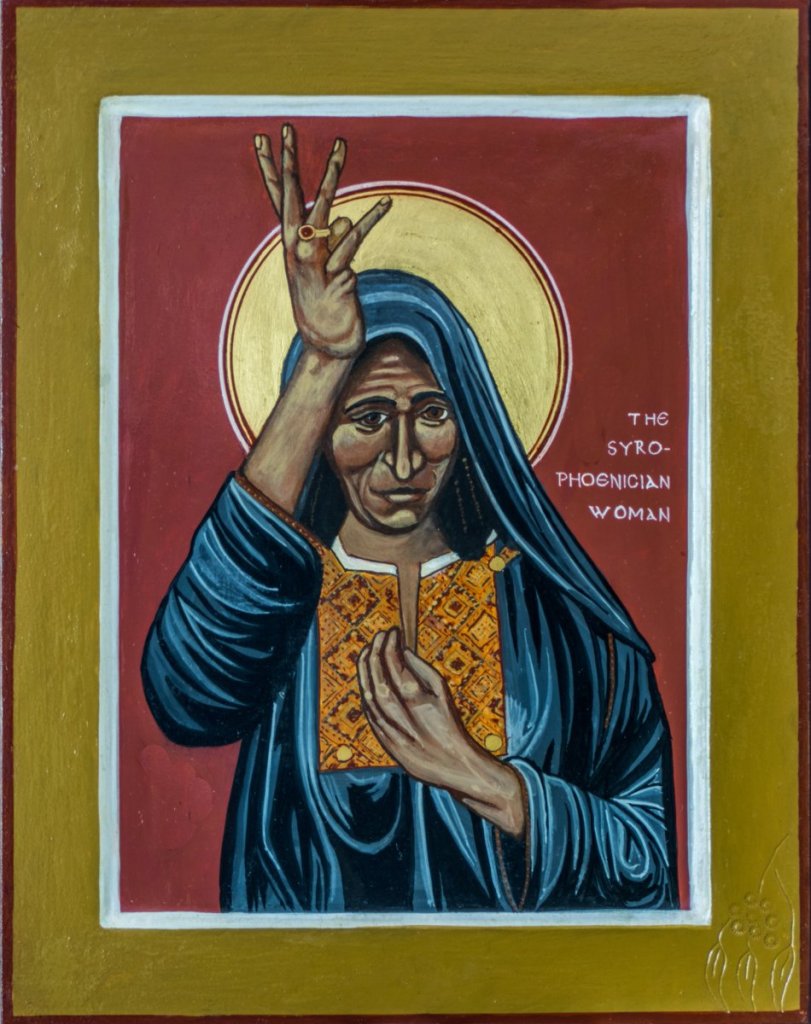
Despite being nameless in Scripture (though sometimes referred to as the Syrophoenician woman), this woman exhibits faith that even the disciples don’t exhibit.
Her daughter is tormented by a demon. She finds Jesus, who has strayed from his native Nazareth and is off in the land of Tyre and Sidon.
She—a woman in the Ancient Near East in the first century, mind you—boldly approaches a man she calls “Son of David.” She knows who this Jesus is, at least at an intellectual level. This isn’t some ordinary man. This is someone deserving of the name she calls Him three times: Lord.
She makes her request boldly, passionately, and—I presume—with the deep anguish of pain that only a parent can bellow. And she is seemingly ignored by Jesus. Ignored! By the One who, just a short while later, would cry out to His Parent for seemingly ignoring Him on the cross.
This woman takes a risk: three times, she asks for Jesus’ healing. It’s one thing to feel rejected by Jesus once, but to risk feeling rejected three times? That’s some boldness.
A boldness I don’t have. I might ask the Son of David for something once. But when it feels like He says no, I’m done asking.
Why do I do this? Why might you do this? If you’re anything like me, it’s because I don’t want to have to go through the hard work of reconciling with a God that allows bad things to happen in a world that He’s promised to make right. So I jump off that cross.
And yet, if I didn’t jump off that cross, if I was willing to risk the discomfort of trusting in a God that allows wrong to happen, I would begin to know God more deeply. This Canaanite woman, coming with knowledge of who Jesus was, walked away knowing Jesus, all because she was willing to come to Him brokenhearted.
2. Stephen (Acts 7)
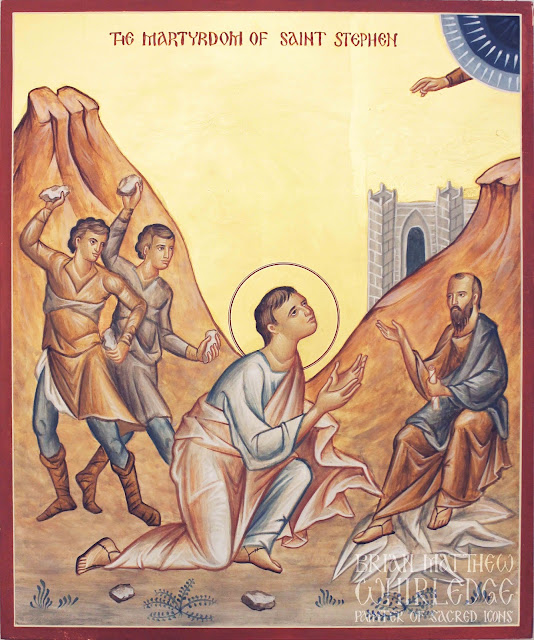
Only a select few people in Scripture get a glimpse into heaven. I think of Isaiah, who saw the hem of God’s garment; Ezekiel, who saw odd creatures and an obscure wheel; and John, who saw a lot of… weird stuff. But when the heavens opened up for Stephen, he saw something unlike the others: a clear picture of Jesus standing at the right hand of the Father.
Many times when I’m reading Scripture, I think, “I wish I could have seen what they saw.” Ezekiel and the dry bones, Elisha and the heavenly army, and Stephen and the glimpse of heaven. Who wouldn’t want to see that?
To be fair, I didn’t say that I would want to be there. Graveyards are creepy, armies mean war, and Stephen was… let’s say, stuck between a rock and a hard place.
I can only imagine what Stephen was thinking in the moments leading up to seeing the heavens opened. He seems confident, and he probably was. But his life was about to be taken from him. Certainly his heart would have had to be breaking inside of him. Seeing the way the people who Stephen cared for so deeply to evangelize to them turn on him so quickly had to leave him feeling helpless, brokenhearted, desperate even.
I avoid moments like these, moments (like Shadrach, Meshach, and Abednego standing before a fiery furnace) when faithful followers of God stand before people of power and say, “Even if our God doesn’t come through, this death will be worth it.” Heck, I even avoid moments of feeling discomfort before those who God wants me to share His love with. I balk. I leave. I don’t want to feel like I’m dependent on anyone, even God. But if I were to depend on God, to feel helpless even, I think I’d have the opportunity to really know a God that is there when my heart is breaking with desperation.
I can’t help but wonder if there’s a correlation between helplessness and holy moments. In her brilliant Bible study-turned-book Inside the Miracles of Jesus, Jessica LaGrone makes this claim, linking our desperation to the forthcoming miracles of God: “Right before each miracle [story of Jesus], there is desperation: a person or group of people who are at the end of their ropes with no hope unless Jesus steps in to fix their situation.” Desperation to God is a main ingredient of miracles. Yet, when facing the cross of desperation, I bail.
If anyone was able to follow Jesus’ instructions to pick up their cross—even the cross of desperation—and follow Him, it was Stephen, the Church’s first martyr. Rather than choosing to skirt around the cross, Stephen followed His Savior by being dragged out of town and proclaiming, with tones of total dependence on God, “Lord Jesus, receive my spirit.” Stephen knew a God that was there for one whose heart was broken by people rejecting the Christ.
3. Hagar (Genesis 16 & 21)
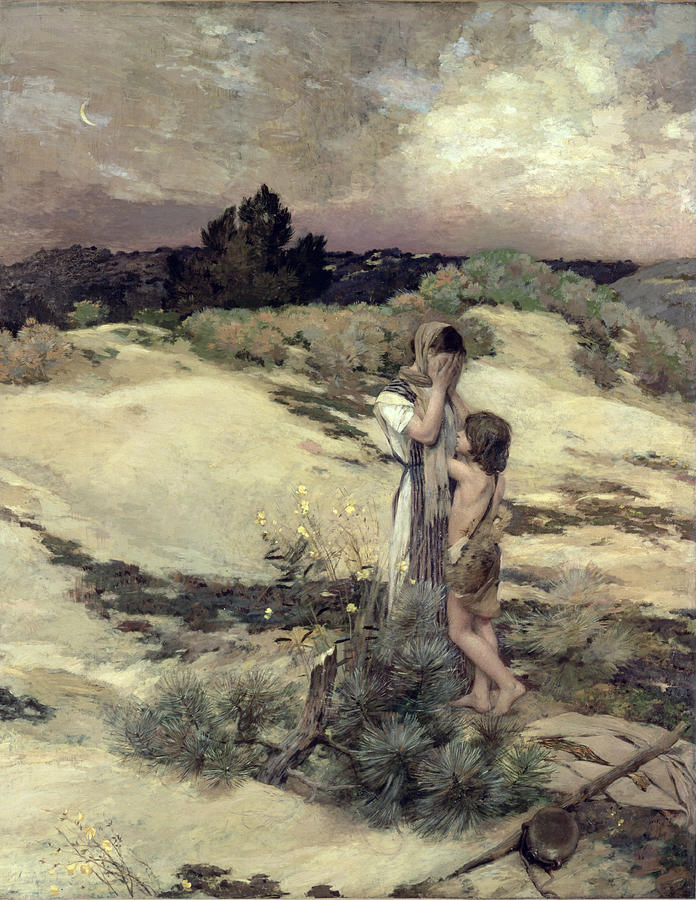
Have you ever felt like a stranger, wondering where in the world God is? Meet Hagar, whose name literally means “stranger.”
Hagar’s entire world had been flipped upside down: Her mistress’ husband and the father of her child had given her mistress permission to treat her harshly, which she did. So much so that Hagar found it better to be out on her own with no one and nothing to care for her than to be under her cruel mistress.
In Christianese, we use this word “wilderness” a lot. It’s a description for a time when we feel lost, confused, distant from God. When we feel like a stranger in a strange land. When someone has mentioned that they’re in a wilderness, it’s not some joyful thing to celebrate. It’s a lament, a signal that things aren’t going well.
And yet, it’s in the wilderness that God is often found. In Hagar’s case, the angel of the Lord meets her in the wilderness and announces that she is pregnant.
Hagar the stranger, left alone in the wilderness, is the first person recorded in Scripture to give God a name: El-roi, “the God who sees.”
However, all is not well in Hagar’s life. Years later, her son’s father kicks them out, this time with mere bread and water to sustain them. Hagar is essentially sentenced to death. Worse yet, she’s sentenced to watch her son die. Where is this God who sees?
This God—who knows the pain of watching a Son die—showed up again, revealing Himself to also be the God who hears: “And God heard the voice of the boy; and the angel of God called to Hagar from heaven, and said to her, ‘What troubles you, Hagar? Do not be afraid; for God has heard the voice of the boy where he is…’” (Gen. 21:17)
Twice, Hagar finds God in the wilderness. Twice, He sees, He hears, He rescues. It’s who He is: the God who rescues.
Throughout my life, I’ve avoided the wilderness. I’ve passed by the Wilderness of Sadness, only to find myself swimming in the Sea of Social Media. I’ve rerouted around the Wilderness of Doubt, taking a detour through the Desert of Delusion and Fantasy. I’ve avoided the Wilderness of Pain, only to find myself on the Path of Productive Distraction. I avoid the wildernesses of life, only to numb myself out on something of this world.
What would I have found if I had chosen to enter the wilderness, the place our Savior entered at the start of His ministry? I’m pretty sure I would have found God in the wilderness, revealing Himself to be far greater than I previously imagined. Hagar knew God by entering into that wilderness, the wilderness I so often reject.
All three of these persons we find in Scripture had something in common: they didn’t avoid the road that led to brokenheartedness. Whether it be the discomfort of potential rejection, desperation, or loneliness, they didn’t jump off the cross that was before them, but trusted in the One who made a way beyond the cross.
On this Good Friday, we remember the cross that Jesus died on. We remember that He called us to take up that same cross and follow Him. That road isn’t an easy road and that cross isn’t a light load. But it’s a road that Jesus has walked before. He knows the way. His Father extended that road beyond the cross to an empty tomb. We don’t have a resurrection without a crucifixion. We don’t have Easter without Good Friday. We don’t know God fully without knowing Him as the God who is near to the brokenhearted.

 Hunter Bethea
Leave a comment