
A couple Sundays ago, I shared at church that I’ve never been the kind of Christian who can sit down, bow my head, close my eyes, and talk to God.
For one, I used to just fall asleep. Most of my life, I’ve been sleep-deprived, so closing my eyes to do anything other than sleep was a recipe for dosing.
But even after I began taking better care of myself and getting more sleep, that kind of praying (which was the only kind of praying I thought counted as “prayer”) still wasn’t helping me connect to God. I would think about what I wanted to do that day or reflect on a conversation from the day before, all the while derailing what was supposed to be a conversation between me and God.
For a while, I blamed this on my low-level anxiety (and some of it certainly was due to that), but even after I worked on healthy coping skills for anxiety, the fact still remained: I couldn’t pray by sitting down, bowing my head, closing my eyes, and talking to God.
For the longest time, I thought that made me a bad Christian. Instead, I realized it’s just how I was made.
I don’t know about you, but each of my relationships has different communication styles. With some people, I only communicate on the phone. With others, I text. Some of my relationships have been strengthened by late-night conversations. Others are strengthened when we’re working on a project together. Many are strengthened by me making memes of them. I even had one friend in college where we pretty much exclusively conversed at Moe’s Southwest Grill.
I think that it’s the same way with God. I don’t think He created each person on the planet to converse with Him in the exact same way. But if you’re like me, the primary way you’ve been taught to talk with God was bowing your head, closing your eyes, and talking with Him silently in your head.
For those people, like me, that struggled to talk with God in that way, I think it’s helpful to experiment with other ways of praying. I’ve compiled a list of five tools I’ve used to pray in different ways with God that have helped me talk with and listen to my Heavenly Father. I hope some of these help!
1. Prayer Book
The first time I ever remember learning to pray in a way that was different than the “bow, close, talk” method was when I went to my youth group summer camp. I believe I was in sixth or seventh grade and one of the local youth pastors, Jeff, was teaching a breakout session on prayer.
If I remember correctly, I won a prize for something and Jeff gave me a prayer book. Now, for those of you who grew up in high-liturgy churches, let me clarify: this wasn’t a Book of Common Prayer or anything like that. This was a book written for teenagers with prayers entitled something like, “When I’ve made a bad grade on a test,” “When I lied to my parents,” and “When I need to break up with someone.”
I wish I could remember the name of the book because it made a big impact on me. But what I remember was that my initial reaction was: “These aren’t my prayers. Someone else wrote them. Why would I pray them?”
But after reading a few of these prayers, I realized: these prayers knew how to put into words that which I wished I could put into words. The first time I went through a breakup, I didn’t know what to say to God. But this book gave me words.
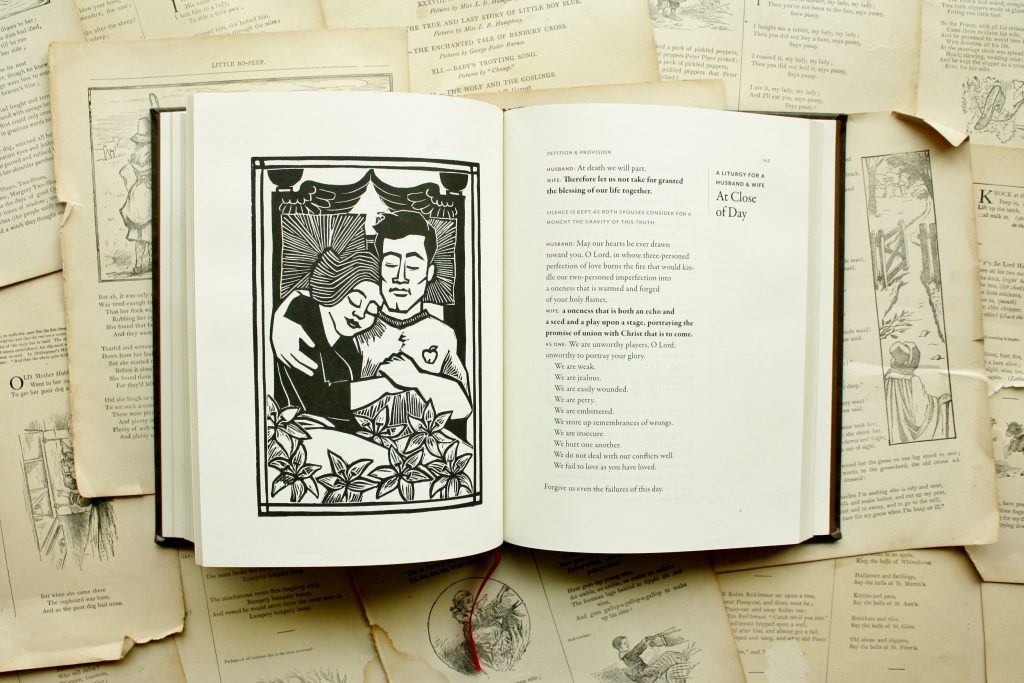
Though I didn’t pick up another prayer book for at least another decade, that began my appreciation for pre-written prayers (what many people call “liturgy”). Nowadays, my favorite prayer books are:
– Every Moment Holy (also check out Volume II on “Death, Grief, and Hope”, and Volume III on “The Work of the People”)
– The Book of Common Prayer
– A Guide to Prayer for Ministers and Other Servants
And ones that have been recommended to me that I haven’t yet read are:
– Living Room Liturgy
– Common Prayer: A Liturgy for Ordinary Radicals
– Little Prayers for Ordinary Day (Children’s book)
2. Prayer Podcast (Guided Prayer)
One thing I’ve noticed about myself is that it’s really helpful for me to have a guide in prayer, whether that guide be a book or someone telling me what to pray for.
I’ve found a couple prayer podcasts to help me do that:
Pray as You Go
The Pray as You Go podcast describes themselves this way:
“Pray As You Go is a daily prayer session, designed to go with you wherever you go, to help you pray whenever you find time, but particularly whilst travelling to and from work, study, etc.
A new prayer session is produced every day of the working week and one session for the weekend. It is not a ‘Thought for the Day’, a sermon or a bible-study, but rather a framework for your own prayer.
Lasting between ten and thirteen minutes, it combines music, scripture and some questions for reflection.”
They forget to mention that all of their readers on the podcast are British, which has been a delightful way for me to start my mornings.
One reason I particularly appreciate the Pray as You Go podcast is that it helps me reflect on Scripture prayerfully and creatively, helping me to see God in new ways.
I also appreciate that it connects me beyond the American Methodist corner of the Christian world I so often find myself in. Frequently, the songs that are sung are in other languages or by other nationalities (some of my favorite songs on the podcast are sung by South African bands!). Started by a Jesuit, the podcast roots itself in the church calendar and introduces me to some of the Catholic feast days.
I especially love their Saturday examen episodes that help you reflect on the week and notice God’s presence in your life.
Check out the “Pray as You Go” podcast on your preferred podcast player (for my Apple friends, here’s a link to it!)
Slō
The Slō podcast describes itself this way in its introduction:
Welcome to slo, the guided prayer podcast — Helping you relate to God through listening and reflective prayer. This is facilitated space for you to slow down and be still in the presence of God. Whether you are listening with a group, on your way to work, cleaning your house, or in a focused time of devotion, may your heart and mind be filled with peace.
Slō was a weekly podcast allowing Scripture to guide your prayer time. Though they no longer produce episodes, all 267 of their episodes are still available online, so you still have plenty of prayers to pray there!
If you’re interested in listening to the “Slō” podcast, search it on your preferred podcast player (for my Apple friends, here’s the show!)
3. Habit Stacking
There’s a practice in secular spaces called “habit stacking,” described by Real Simple as “[a technique that] involves ‘stacking’ the new behavior onto a current behavior to help you remember to do it and/or perform it with less mental effort.”
For example, if you always forget to take your morning vitamin, you could “habit stack” your morning coffee with your morning vitamin: for several days, set a reminder to grab your vitamin when you grab a mug. Pretty soon, you’ll unconsciously be grabbing your vitamin at the same time as your coffee mug.
While I think there’s great benefit to setting aside time to solely focus on prayer, I also take Paul’s instruction seriously to “pray without ceasing” (1 Thess. 5:17). In a season of my life that I wanted to be praying more, I began habit stacking prayer with another daily task, particularly, driving.
At the time, I lived in a very small town and I committed myself to turning off podcasts, music, and the radio any time I was in the city limits. Instead, I would spend time in silence, talking with God, or singing to Him.
Since moving from that town, I’ve kept a similar practice, turning off all input into my head on my way too and from work and instead, spending time with God, as if He’s riding right next to me in my truck.
Not only does this get me praying more, but I’ve found that it helps me to commit my day to God and gives Him the space to help me reframe my day if needed.
One small testimony of how He’s been able to do that: Earlier this week, on my seven-minute drive back from work, I was complaining to Him about a couple encounters during the day that made me really mad (you know that prayer can be as simple as complaining to God, right? Just be ready for Him to reframe that complaint…). I felt like God was redirecting my mind away from the frustrating encounters of the day to two small moments that showed transformation He is doing in a few folks’ lives. In a matter of moments, I went from complaining to God to celebrating what He is doing in and through His people.
4. Pray in Color
While I was a chaplain in a hospital, a friend told me about Praying in Color. The concept is simple: keep your hands busy through coloring/doodling/scribbling/drawing while you talk to God. For someone who has never been able to just “sit down and pray,” this was a very helpful tool for me to intercede for myself and others when I didn’t really know how. As I doodled around their name, I told God how I was hoping He would help them or listened to what He wanted to say to/about them.
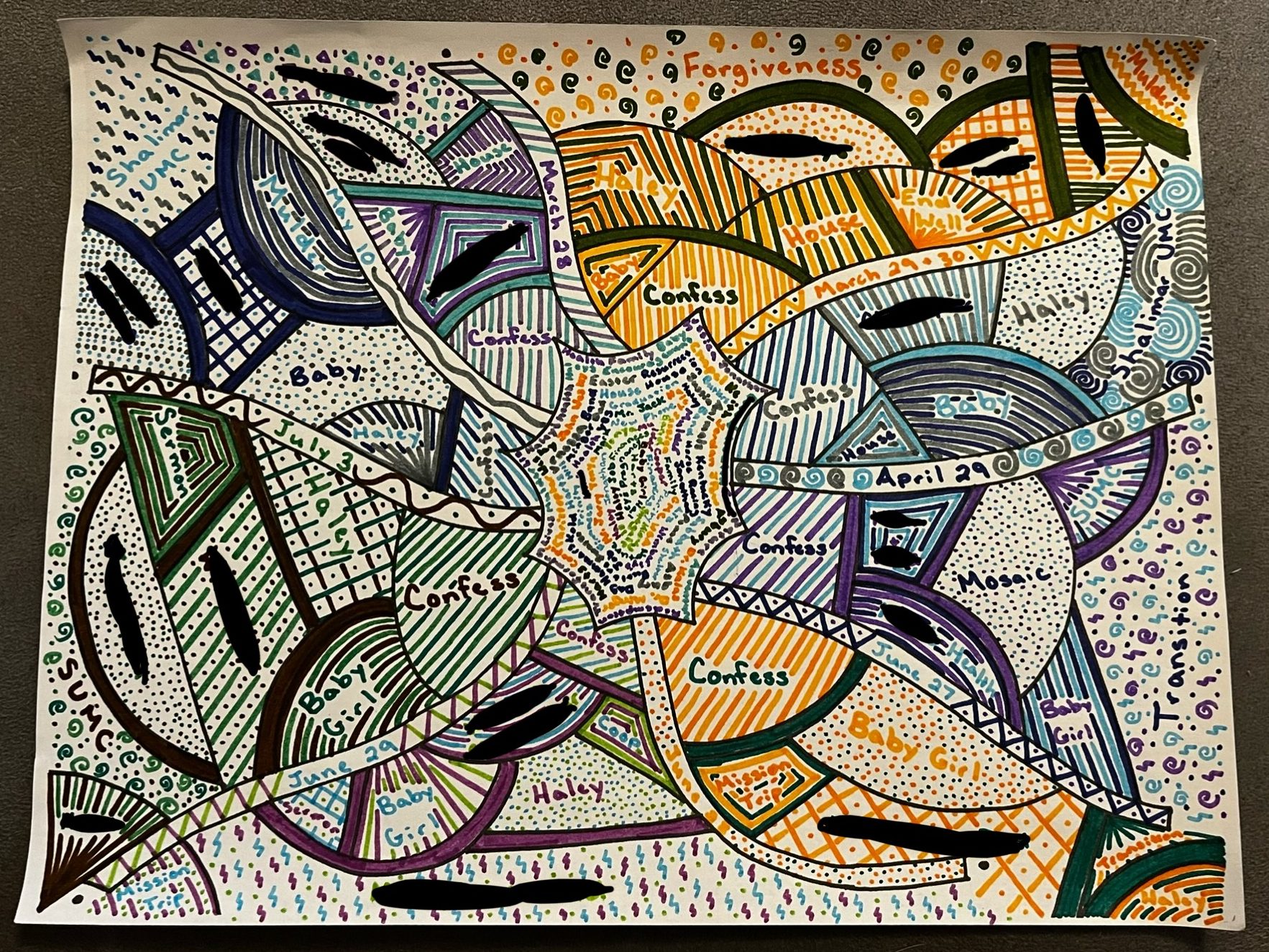
If you’re interested in learning more about Praying in Color or want some sheets to get you started, check out PrayingInColor.com. [Side note: even though I disagree with some of the website’s theological positions, I still find it to be a helpful tool.]
5. Journaling
On and off throughout my life, I’ve spent time journaling. It’s always been a very helpful way for me to untangle all of the thoughts and feelings I have in a safe and effective way. But a few years ago, someone mentioned to me that they were journaling as an act of prayer.
For a few months, I tried writing my journal entries to God. It was a nice way to pray, but didn’t feel like journaling to me. However, I soon began writing my journals as I had before, but this time, I wrote them as if God was sitting right next to me reading everything I wrote. To me, this wasn’t an intimidating thought or made me filter what I was writing, but helped me realize that if something was bothering me or I was overwhelmed, I could pause and ask the One who knew all that I had written and was going to write what He wanted to say to me.
Journaling in the presence of God has been an act of prayer for me. It’s helped me understand what Timothy Keller meant when he said: “We cannot know God without knowing ourselves, and we cannot know ourselves without knowing God. The two kinds of knowledge are inter-dependent—they rise or fall together.”
Don’t Try Them All
I hope some of these five tools for prayer help you connect with your Creator more intimately. But if not, that’s okay! I’m just one person with one perspective, so find someone with a different personality and experiences than me and they’ll surely have other tools for prayer.
And don’t try to implement all of these at once. Try one. Two at the most. But don’t overwhelm yourself with all of these. I don’t even do all of them. Depending on the season, I’ll pick one tool up and lay another one aside.
Here’s to greater knowledge of who you are, who God is, and who He’s created you to be. Be blessed, friends.
If you liked this blog post of mine, you might like some of my other blog posts I’ve written about prayer and/or faith:
PTL…But Make it Sad
Knowing the God of the Brokenhearted
The Two Preachers We Need
The Gender Gap of One-on-One Discipleship
Why I Love Good Friday

 Hunter Bethea
Leave a comment