This past fall, I had the great privilege in following in Paul’s footsteps in on a tour of Greece and Turkey. (I’ve written about some of my experience here, here, and here if you’re interested in reading more.) A theme that kept coming up in my trip was the persecution that early Christians faced.
There’s the obvious persecution of Paul. Beatings, stoning, imprisonment. The list goes on and on. In Philippi, we got to see a jail from the first-century that may have held Paul and Silas. In my idea of what a first-century prison looked like, I envisioned underground tunnels and cave-like rooms; more like catacombs, I guess. But sitting in small cells like these with relatively little space to move while still able to hear the sounds of city life just yards away would have been a unique kind of punishment in and of itself.
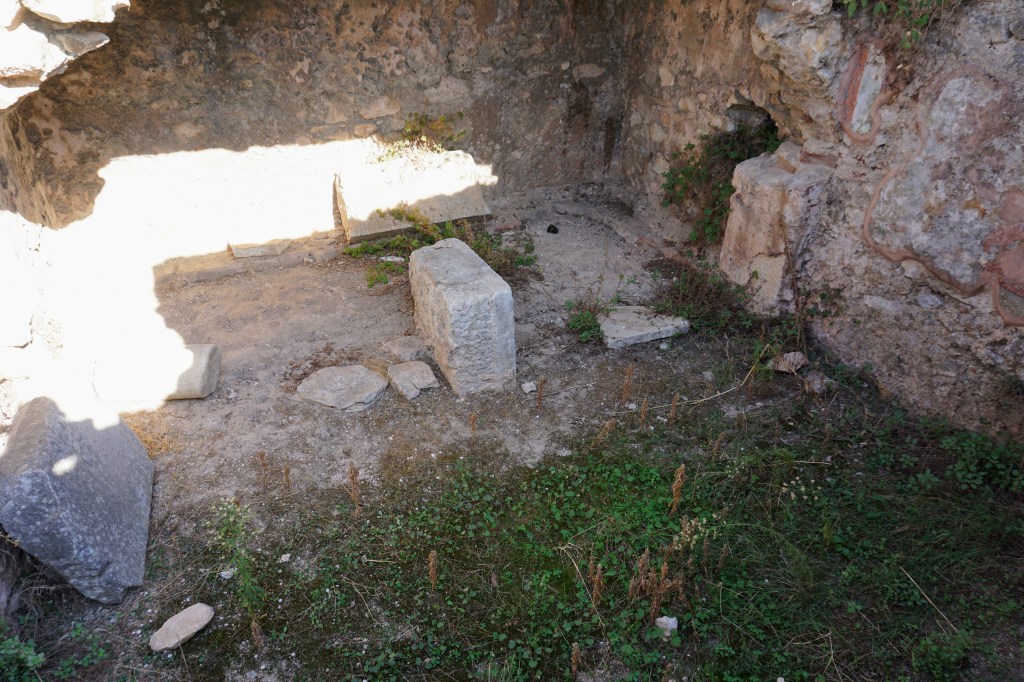
Then there were the homes of the Cappadocian Christians. Christians who, being persecuted by the Roman Empire for their faith, had to leave their cities, their jobs, their families, their communities, their friends, and their way of life, just to go and hide out in rock formations in the middle of nowhere in what is now Turkey.
However, the Roman Army discovered where they were and sent out battalions to go kill the Cappadocian Christians. Fearing for their lives, the Cappadocians Christians had to build underground tunnel networks and homes to live in for weeks while they hid from trained killers intent on decimating their entire community.

Then there was the Theater of Ephesus. A beautiful theater in which Paul may have preached. But, it was also a place where Christians were thrown to lions purely for the entertainment of the crowds waiting to see them eaten alive. (I’ve written previously about how coming to this realization affected me.)

In all of these profound experiences of learning about the persecution of Christians, what I learned was this:
We aren’t persecuted Christians.
For years now, I’ve heard American Christians who experience inconveniences for the gospel talk about the “persecution” they or someone (often, their favorite political candidate) is undergoing.
Examples include:
“I just can’t believe that they’re persecuting her by making her meet with HR.”
“The way we Christians can’t talk about Jesus in the classroom is just straight up persecution.”
“Can you believe how they’re persecuting that candidate with criticism just because of her Christian beliefs?”
Here’s the thing: In many parts of the 21st century post-Christendom America in which we live, it is inconvenient to be a Christian. We sometimes have to undergo significant inconveniences for the gospel, like finding a new job or not retaliating when someone angers us or having to say no to what others are saying yes to.
But, for the overwhelming majority of American Christians, just because we might be inconvenienced doesn’t mean we are persecuted.
(As a side note, I say the “overwhelming majority” of American Christians aren’t persecuted because there are rare cases of persecution in America for professing Jesus as Lord. In seminary, I had a professor who regularly got beat up in his early days of being a Christian while trying to talk to people on the street about Jesus. And just the other day, I listened to a preacher share that he got kicked out of his house in high school because he became a Christian.)
But what’s interesting to me is that neither one of those Christians described themselves as “persecuted.” Those I hear describing themselves or others as “persecuted” are those who are facing inconveniences for the gospel, not actual persecution.
When we mistake inconveniences for persecution, the effects are two-fold.
First, we ignore true persecution, both in Christian history and present-day.
In case you were wondering, persecution still happens today. A recent news story about an Iranian Christian who had to flee her home for fear of her life and sought refuge in the United States, has reminded us American Christians that persecution is still very present today.
When we label inconveniences as “persecution,” we diminish the experiences of those who, forsaking everything else in their life—family, career, and even life itself—kept the faith. How short-sighted we must be to label criticism or discomfort or mockery as “persecution” when people are beaten, murdered, and even have to watch the ones they love get murdered, simply because they’re labeled as Christians.
Secondly, when we mistake inconveniences for persecution, we don’t prepare ourselves for the Christian life Jesus calls us to live.
In Matthew 16:24, Jesus tells us that, “Whoever wants to be my disciple must deny themselves and take up their cross and follow me.” If we claim that being questioned at work or chided by friends for our faith is what “taking up our cross” looks like, then what happens when actual persecution comes?
Many of us may never face persecution in our lives. Some of us may never even face inconveniences for the sake of Christ. In fact, for some people that call themselves Christians in parts of America, it is more convenient to be a “Christian” than it is to not be a Christian.
But we might face persecution. In fact, I believe that in Matthew 16, Jesus is teaching His disciples that they need to prepare themselves for a day when persecution comes. And even though it’s significantly less likely for Western Christians to face true persecution than it was for the Jewish Christians living in the Roman Empire, or the Cappadocian Christians under the rule of Rome, or Iranian or Chinese or Somali Christians today, I think Jesus still wants us to prepare to face persecution boldly without losing the faith.
But if we continue to call inconveniences “persecution,” then how quickly will Christians abandon their faith when they face actual persecution?
When I walked around places like Philippi, Cappadocia, and Ephesus, I kept asking myself a question: Would I keep the faith if I were in that situation?
Unfortunately, if I’m honest with myself, I think too often, the answer would be no. I’m not sure that I wouldn’t give into the powers of the world and reject Jesus.
Maybe that’s because I’ve only prepared myself for the inconveniences of the gospel, not actual persecution.
But what if I could prepare myself for persecution? What would it look like to treat inconveniences for Jesus merely as inconveniences and prayerfully prepare myself for facing true persecution, if that ever should come? What if all American Christians did this?
Frankly, I think we’d see a new movement of God.
Throughout church history, where Christians are persecuted, God has moved in powerful ways. I think that’s because Christians who are willing to be persecuted are Christians who proclaim Jesus the most boldly.
Here’s the hope of it all: Romans 8:17 says, “Now if we are children, then we are heirs—heirs of God and co-heirs with Christ, if indeed we share in his sufferings in order that we may also share in his glory.”
We will not endure persecution alone. Our God suffered persecution too. And we do not endure persecution as those without hope. No, we do so as those who know that in sharing in Christ’s sufferings, we will share in His glory.
So may we be people who see the inconveniences of following Jesus as a bare minimum of the job description of a Christian. And may we be people who are willing to pick up our crosses and endure true persecution, if that ever should come.
And maybe, just maybe, we can echo the words of Paul, written from a jail cell: “I will continue to rejoice” (Philippians 1:18). For whether we live or die, Christ will be glorified.
Are you interested in getting email updates each time I post a new blog post? Subscribe below!
Are you following my Facebook page? Check it out here:

 Hunter Bethea
Leave a comment