This time of year, Christians around the world begin celebrating a season only heard about in the church and calendar worlds: Advent.
But what is Advent? And why do we celebrate it?
I’m glad you asked. I hope this brief summary of the season of Advent helps you and yours find more meaning in this Christ-focused season.
What is Advent?
“Advent” comes from the Latin word adventus, meaning “coming” or “arrival.” Before Jesus was born, it especially referred to the arrival of a significant figure into a city. Take for example, the arrival (the adventus) of an emperor. Such an occasion was met with much anticipation, preparation, and celebration. An emperor did not simply enter a city: they were met at the outskirts of the city, with a proverbial red carpet rolled out and great fanfare as the emperor made his way into the walls of the city.
Advent, then, is the anticipation of the “coming” or “arrival” of Jesus. In nearly all denominations and traditions of the Church, it begins four Sundays before Christmas (in 2025, this would be November 30). Because it precedes Christmas, we often think of it remembering and celebrating the anticipation of the arrival of Jesus as a baby (celebrated on Christmas Day). For thousands of years, the people of God had waited for their Messiah to come, to save them from their enemies, themselves, and their sins. By observing this season of waiting, we enter into the story of the faith as expressed in the Old Testament: a story of waiting for the Messiah, the Christ, to come.
But Christ has come, you might point out. Why do we need to enter into a waiting for something that has already happened?
Great question. Because we’re still waiting. Not for Christ to enter the world. But for Christ to return to His world. Advent acknowledges two waitings: a waiting for the Messiah to come (fulfilled in the birth of Jesus) and a waiting for Him to return (yet to be fulfilled).
In fact, the early Church’s primary focus of Advent was on the waiting for the second coming of Christ, not the first. With the prevalence of celebrating Christmas, the focus has shifted from waiting for Jesus’s return to remembering His first arrival.
Contrary to our civil calendars, where Advent takes us almost to the very end of our year, the Christian calendar actually begins with Advent. More than just a fun fact, this actually has great importance to our focus as Christians. We begin by focusing on the return of our King, the One who has come and will come again. We begin with the end in mind—and not merely the “end” like the end of the story, but the “end” like the fulfillment and completion.
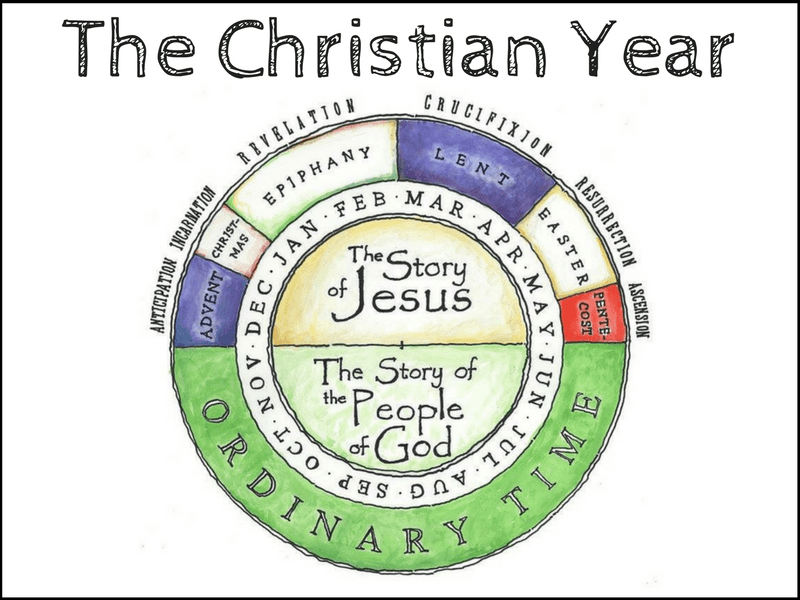
At the very beginning of the year, we proclaim: “We are a people on a journey that will be made complete, full, and perfect. We are a people who are living in the already-not-yet. We are a people living in a world in a way that proclaims that the best is yet to come.”
As Laurence Hull Stookey says in his helpful book Calendar: Christ’s Time for the Church, “We are not aimlessly wandering in a wilderness, even though we may be tempted to think so. Rather, history is headed somewhere by direction (though not dictation) from God.”
When did the Church start celebrating Advent?
Like most Christian celebrations, the season of Advent developed over time as the Church established norms and practices to remember and order our lives around the story of God. Therefore, it’s hard to pinpoint when the season of Advent was first celebrated. But we do know that it was already in existence by the 480s.
As Jonathan Powers explains in this helpful Seedbed article, in the early church, the two highest holy days were Easter and Epiphany (over time in the Western Church, these have shifted to Easter and Christmas). Because Easter (celebrating the resurrection of Jesus and His victory over death) and Epiphany (celebrating Jesus’s incarnation and revelation to all as Savior) are such celebratory days, the early church chose to use those days for baptizing new Christians.
Baptism, especially in the early church, came after a season of preparation for the soon-to-be-new members of Christ’s Church. The season of preparation before Easter has come to be known as Lent and the season of preparation before Epiphany turned into what’s now known as Advent.
Why do we celebrate Advent?
As previously mentioned, we celebrate Advent to enter into the story of the people of God, both those who waited for the first coming of Jesus and those who are waiting for His return. By commemorating these events of the story of God, we are—in some spiritual way that I can’t explain—being brought into the reality of the events we’re remembering.
But underlying this question is a deeper question: Why should we celebrate any church seasons and holidays at all?
Why can’t every day be Christmas? Or every day be Easter? Or every day be Pentecost? Or every day be Chreastercost?
Frankly, because every day isn’t Christmas or Easter or Pentecost. Not to say that we don’t live every day in the reality that Christ has come, He is risen, and His Spirit is given to us. But because if we try to live every day the same, we’ll neglect the reality that every day isn’t the same. If we act as if every day is a feast day, then we’ll neglect the harsh reality of life: every day isn’t a celebration.
If we’re going to live into the story of God as expressed to us in Scripture, then we have to have seasons that express the vast emotions and seasons of Scripture. We need to acknowledge the emotions of impatience and disappointment and excitement and joy and sorrow and lament. We need to acknowledge the seasons of waiting and celebration and anticipation and awe and grief.
Advent (and the other seasons of the Christian year) give us space and time to live like Christ in the various seasons and emotions we encounter.
From the very beginning of the formation of Israel, God gave them feasts and festivals and seasons to observe. These were formative in and of themselves, teaching the people who they were, who God is, and how to live under His leadership. In fact, even before the formation of His people, God created the very first day of humanity’s existence as a holiday—a holy day, the Sabbath day—to teach Adam and Eve about who they were and who God was.
Holidays, holy days, feasts, festivals, seasons… they all shape us. But they all shape us differently. Because of this, what we celebrate matters.
How do we celebrate Advent?
So how do we celebrate Advent?
There’s no one “right” way. Because of the vast differences in people, families, churches, denominations, and cultures, there are many appropriate ways that you can celebrate the anticipation of the arrival of Jesus.
Let me share examples of some most popular ways I know to celebrate (in my small Methodist, American corner of the world) and a couple that I’m doing this year.
Advent Wreath
Many churches across denominations have an Advent wreath—a wreath with three purple (or blue) candles and one pink candle surrounding one white candle in the center.
Each Sunday leading up to Christmas, one more candle is lit. Each candle has a specific theme associated with it:
Week 1 (November 30, 2025): Hope (Purple)
Week 2 (December 7, 2025): Peace (Purple)
Week 3 (December 14, 2025): Joy (Pink)
Week 4 (December 21, 2025): Love (Purple)
Christmas Eve/Day: Christ/Light (White)
Now… a question I ask each Advent (because I keep forgetting from the Advent before)… why the lone pink candle?
First, let’s answer the question: Why purple? Purple (or dark blue) is the color of Advent. In the Church world, the dark color of purple represents lament, sorrow, and waiting (Lent’s color is also purple). As previously mentioned, Advent began as a season of preparation for baptism. That kind of preparation was marked with fasting and repentance, so purple was the color of choice for the season.
But, despite acknowledging that sorrow and lament and waiting are parts of life—even the Christian life—they aren’t the defining parts of our life. So one week in Advent (the third week) and one week in Lent (the fourth week) are set aside as weeks characterized by joy. Thus, the color of the candle and paraments (cloths in the worship service) change to pink (technically “rose”) “as a reminder on these Sundays that even in the midst of longing, penitence, and fasting, the church never ceases to rejoice” (Powers).
Lighting Advent wreaths in the church or home are often accompanied with a brief liturgy, which you can find online or in your church’s or denomination’s book of worship.
Advent Devotionals
Many, many devotionals focused on the anticipation of Christ’s arrival are on the market. It seems like just about every author has one. Two that I’ve enjoyed in the past are:
The Greatest Gift by Ann Voskamp (my favorite!)
Unwrapping the Names of Jesus by Asheritah Ciuciu
This year, many people I know are using Seedbed’s Brought to the Light by Anna Grace Legband. I’m still undecided but I think I’ll be using Caroline Cobb’s Advent for Exiles.
I like Advent devotionals as a practice because they’re designed to keep you thinking about the “reason for the season.” They’re helpful daily reminders that what we’re waiting for isn’t a day of joy, but the return of the One who is the fullness of joy.
Advent Calendars
Because Advent always starts on a different day of the year, Advent devotionals and calendars typically begin on December 1 (which isn’t always the first Sunday of Advent), further complicating the confusion about the season of Advent. Advent calendars are a countdown tool used during the days leading up to Christmas. Typically, each day has a door or window to open, revealing a small treat, image, or message to mark the anticipation of Christmas.
You can find an Advent calendar for anything (and I do mean anything). There’s the usual chocolate Advent calendar with chocolate that tastes like it’s from 4 Christmases ago, coffee and tea Advent calendar, Lego and lip balm calendars, as well as calendars for the dog, golf, dinosaur, outdoor, gemstone, and murder mystery fan in your life.
What I love about Advent calendars is that, as secularized as they’ve become, they’re still about waiting and anticipating. We as Christians know what (or shall we say, Who) they’re anticipating.
Caring for your Community
A new way my family and I are planning to celebrate the season of Advent is by making Christmas treats and delivering them to people in our church and community, particularly neighbors and those who may be alone or lonely this Advent season.
One of the missteps we can make when we focus on the return of Jesus in the season of Advent is falling into the trap of escapism, convincing ourselves that we shouldn’t care about the cares of this world because Jesus will soon return.
Bluntly, this isn’t a Biblical way for us to anticipate the arrival of Jesus. In Matthew 25, Jesus tells us about those who may be waiting most excitedly for the return of Jesus: those who are hungry, thirsty, estranged, under-clothed, sick, and imprisoned… those experiencing some of the deepest brokenness of the world. What Jesus tells us is that those who serve these and others like them have served Jesus.
With a two-year-old, the options for us to be able to serve those who are experiencing the deepest brokenness of the world as a family are a bit limited. But we want to get into the habit of making this part of our Advent rhythm as a family and we’re going to start with those who live next door and down the street.
As those waiting for the arrival of Jesus, we want to be part of preparing earth for that great and glorious day. We want Jesus to return to a place that looks more like Heaven than when He left it, a place where those empowered by His Holy Spirit lived like Him while He was away. What is still reflecting the brokenness of the world when He returns will surely be made right by Him, no doubt… but why wouldn’t we want to be part of that process before His return? And what better season to be a part of it than Advent?
A Personal and Pastoral Word about Advent
Lest this brief introduction to Advent be only about history, worship planning, and ideas for the season, let me offer a brief personal and pastoral word about Advent.
In my 30 years of celebrating Advent and Christmas, there are some years when I’m more ready for the season than others.
Some Advents, I counted down every single hour until Christmas Day.
Other Advents, all I cared about was a family member getting out of the hospital.
Some years, I felt like the shepherds: filled with awe and wonder at the Christ-child.
Other years, I felt more like the magi: wandering aimlessly, wondering where He was.
Advent has an extraordinary way of looking back over each and every year just passed—the good years and the bad years—and offering a whisper: “I know.” It’s the voice of the One made flesh saying, “I know. I know what it’s like to experience profound joy. I know what it’s like to experience profound pain. I know what it’s like to watch the lame dance in the streets. I know what it’s like to stand at a friend’s tomb. I know.”
Advent—this beautiful in-between season of remembering that Christ has come and yearning for Christ to return—has a way of reminding us that the God of the universe came as a baby to bring the advent, the arrival, of the Kingdom of God. But that Kingdom hasn’t reached it’s end yet; the story isn’t over until everything is made right.
So welcome to Advent, a season of in-between-ness. Happy New Year, if you will! Prepare to welcome the Christ-child who has come. Prepare to welcome the Christ who will come again. And know this: God, who was faithful to send His Son to the world to fulfill the promise of a Messiah, will be faithful to send Him back to fulfill the promise that all will be made new.
Happy Advent!
Sources (listed in order of helpfulness/relevance):
“Why Is There a Pink Candle in the Advent Wreath?” by Jonathan Powers
Calendar: Christ’s Time for the Church by Laurence Hull Stookey
“Advent: A Rookie Anglican Guide”
University of Nottingham Blog: Constantius II’s Entry into Rome
If you’re new to my blog, welcome! I’m glad you’re here. I’m Hunter Bethea, a follower of Jesus, husband, father, Global Methodist pastor, and curator of books I don’t have time to read. You’re welcome to learn more about me here.
I primarily write about faith, family, and leadership, all with a Wesleyan accent. If you’d like to receive my newest blog posts in your email, sign up below. Also, if you’d like to check out my Facebook page (where I share more than just my blog posts), check it out here!
And finally, here are some of my most recent blog posts if you want to read more!

 Hunter Bethea
Leave a comment